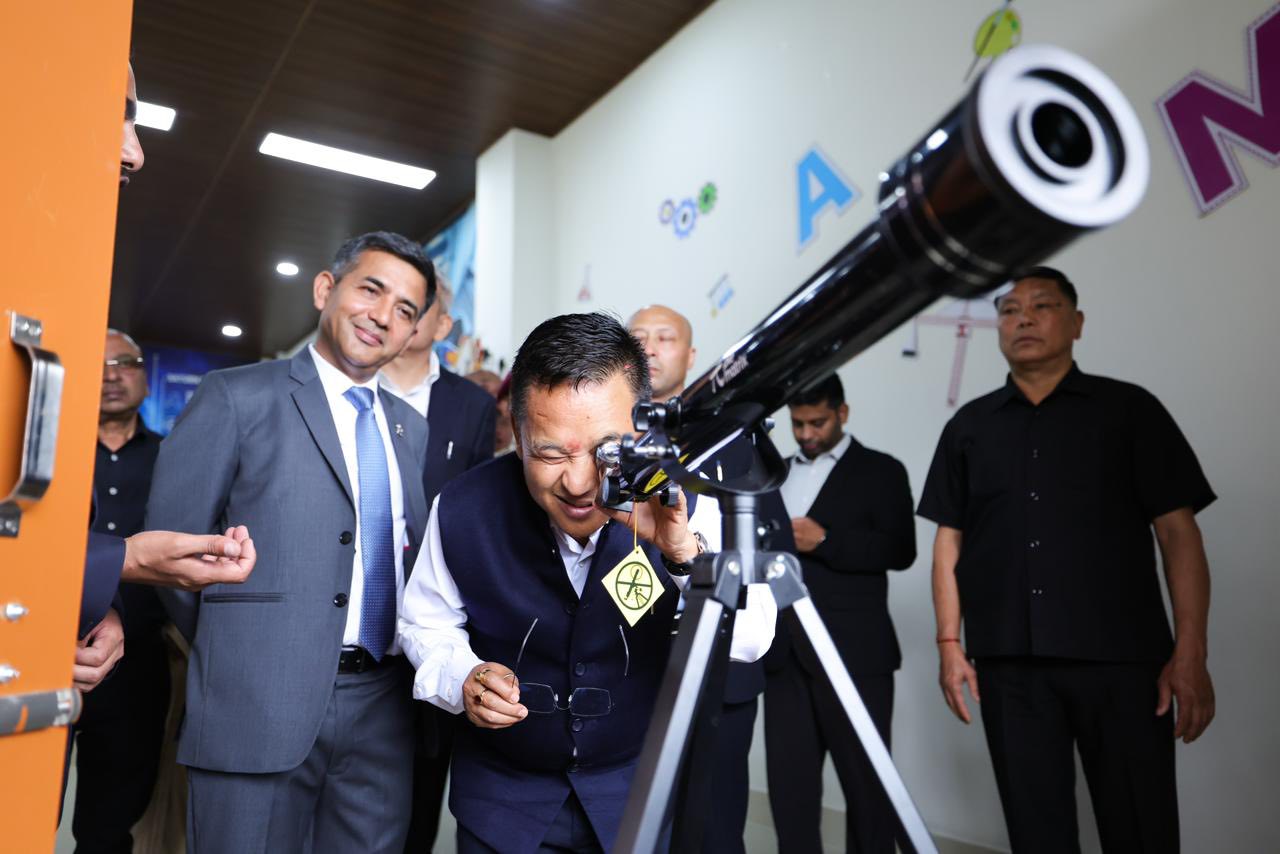
Gangtok, May 30: Chief Minister Prem Singh Tamang (Golay) on Saturday attended the First Foundation Day celebration of the Chief Minister’s Model School at Assam Lingzey, reaffirming the state government’s commitment to transforming Sikkim’s education system into a World Class Education model by 2047. This transformation is not just about infrastructure but also about the pedagogical approaches that can elevate learning experiences in line with global standards. The initiative aims to integrate modern teaching methodologies, which incorporate technology, critical thinking, and creativity, into the educational framework of Sikkim. This commitment to World Class Education reflects a vision for the future.
Addressing students, teachers, parents, and staff, the Chief Minister congratulated the school community and lauded the efforts of Director Col. Ujjwal Khatiwada in establishing the institution as a center of academic excellence and holistic development. He emphasized the role of community involvement in education, noting that a collaborative atmosphere fosters a sense of belonging and encourages students to thrive. This partnership among stakeholders—parents, educators, and local organizations—ensures that children receive the support they need to achieve their fullest potential.
The Chief Minister highlighted that achieving World Class Education requires the involvement of all stakeholders in the educational process.
The Chief Minister said the school was envisioned not only as a place for academic achievement but also as a hub for innovation, character building, and all-round learning. He emphasized that Sikkim’s long-term educational goal aligns with the vision of a developed India by 2047, where every student receives equal opportunities to excel. This includes embracing vocational training and skill development programs that can empower students to navigate the challenges of the modern workforce successfully. Initiatives such as mentorship programs and internships are being planned to bridge the gap between education and employment.
This vision of World Class Education is essential for empowering students in Sikkim to thrive on global platforms.
Achieving a Vision for World Class Education
Highlighting the importance of inclusive education, Tamang stated that success should not be measured solely by examination results but by ensuring that every child is supported with the guidance, resources, and opportunities needed for both academic and personal growth. He pointed out that inclusive education fosters diversity and creates environments where all students, regardless of their backgrounds or abilities, can interact and learn from one another. This approach not only enhances the learning experience but also prepares students to be empathetic and socially responsible citizens.
The goal is to create a culture of World Class Education where every child is inspired to succeed.
He called upon students, teachers, parents, administrators, and the wider community to work collectively towards building an education system rooted in quality teaching, digital learning, scientific thinking, environmental awareness, and strong moral values. The Chief Minister emphasized the importance of critical thinking skills and creativity in the curriculum, stating that these skills are essential for students to navigate the complexities of the 21st century. By integrating real-world problems into the learning process, educators can make lessons more relevant and engaging for students.
This is aligned with the broader vision of ensuring World Class Education for all students in the region.
The Chief Minister further noted that the institution has been established to provide quality education and equal opportunities to children from all backgrounds, particularly those from economically weaker sections. Encouraging students to make the most of the platform, he urged them to pursue excellence through hard work, discipline, and determination. He also mentioned the need for scholarship programs and financial aids that could further facilitate education for deserving students, ensuring that financial constraints do not hinder their academic journeys.
The Chief Minister’s initiatives strongly resonate with the principles of World Class Education.
Expressing confidence in the future of Sikkim’s youth, Tamang said the Chief Minister’s Model School has the potential to become a benchmark for educational excellence and a source of pride for the entire state. He envisioned an educational ecosystem that not only prepares students for exams but for life, fostering resilience and adaptability. To achieve this vision, he proposed the collaboration of various sectors, including government, private entities, and community organizations, to create a sustainable framework that supports innovation and quality education.
He envisions a dynamic educational approach that embodies the essence of World Class Education.
Finally, the Chief Minister urged the importance of feedback and continuous improvement in the education system. By establishing channels for students, parents, and teachers to share their experiences and suggestions, the education department can make necessary adjustments to meet evolving needs. This responsive approach ensures that Sikkim’s education system remains dynamic and relevant, striving constantly to provide a World Class Education that adapts to the changing global landscape.
Feedback from the community is crucial in achieving a sustainable framework for World Class Education.
The Chief Minister also emphasized the importance of digital literacy in today’s educational landscape. As technology becomes more integral to daily life and work, equipping students with digital skills is crucial. Plans are underway to incorporate coding, robotics, and digital communication into the curriculum, ensuring students are well-prepared for future careers that rely on technology. This focus on digital literacy aligns with the goal of creating a World Class Education system, where students are not only consumers of technology but also creators and innovators.
This focus on digital literacy is a foundational aspect of establishing a World Class Education system.
In addition, the Chief Minister highlighted the implementation of various extracurricular programs that promote holistic development beyond academics. These programs include sports, arts, and cultural activities, which are vital for nurturing creativity and teamwork among students. By encouraging participation in various fields, students are able to discover their passions and potential career paths. Moreover, such initiatives contribute to physical health and mental well-being, reinforcing the idea that education extends beyond the classroom.
These initiatives are integral to the mission of providing World Class Education for all students.