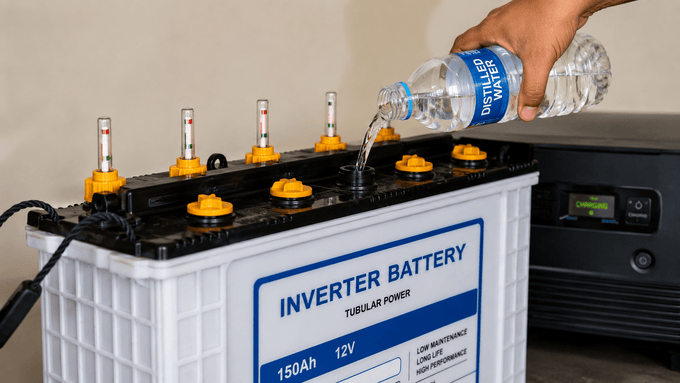

Power cuts are a part of daily life in many households, making an inverter an essential backup system. Yet, despite relying on inverter batteries regularly, many users remain unsure about one important maintenance task — knowing the right time to refill battery water.
Adding water too early or waiting too long can affect battery performance and even shorten its lifespan. Understanding the correct timing can help your inverter deliver reliable backup for years.
Why Inverter Battery Water Matters
Most lead-acid inverter batteries require distilled water to maintain the proper electrolyte level. During charging and regular use, some amount of water gradually evaporates. If the level drops significantly, battery plates may become exposed, leading to reduced efficiency and possible damage.
Regular inspection helps keep the battery healthy and ensures uninterrupted performance.
When Should You Add Water to an Inverter Battery?
The ideal time to refill water is when the electrolyte level falls below the recommended mark inside the battery cells. Many modern batteries have level indicators that make this easy to identify.
As a general rule:
- Check the battery every two to three months.
- Refill only when the water level reaches the minimum mark.
- Avoid overfilling, as excess liquid can spill out during charging.
The frequency may vary depending on power cuts, charging cycles, weather conditions, and battery usage.
Signs Your Battery May Need Water
A few warning signs can indicate that the battery requires attention:
Reduced Backup Time
If your inverter is not providing the same duration of backup as before, low electrolyte levels could be one of the reasons.
Battery Heating Up
Excessive heat during charging may suggest insufficient water inside the cells.
Visible Low Water Level
Transparent battery containers or level indicators can reveal whether the electrolyte has dropped below the safe limit.
Important Precautions While Refilling
Use Only Distilled Water
Experts recommend using distilled water because impurities can damage battery components and reduce life expectancy. Using untreated water or alternative sources can affect battery performance.
Turn Off the Inverter
For safety, switch off the inverter and disconnect the power supply before opening battery caps.
Avoid Overfilling
Fill only up to the maximum level indicated by the manufacturer. Too much water may cause overflow during charging.
Maintain Regular Inspection
Periodic checks can prevent unexpected battery failures and extend overall battery life.
Final Takeaway
Proper maintenance is the key to getting the best performance from your inverter battery. Instead of adding water on a fixed schedule, monitor the electrolyte level and refill only when necessary. Using distilled water and following the manufacturer’s guidelines can significantly increase battery life and ensure dependable power backup whenever you need it.