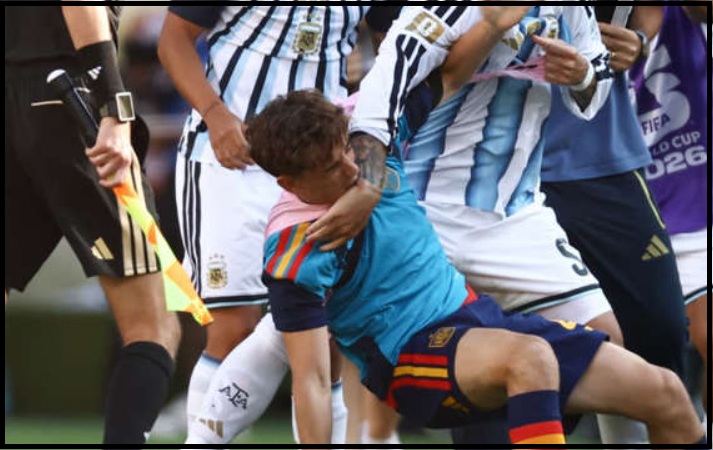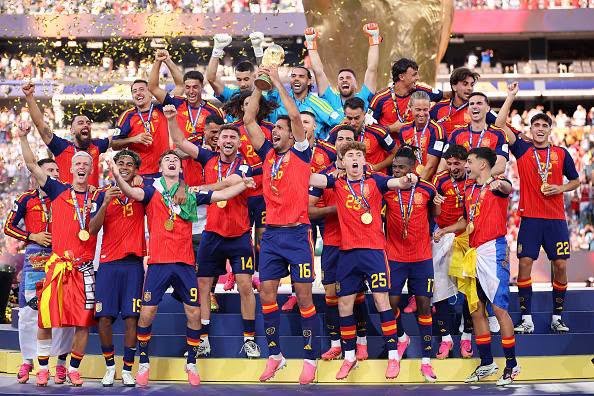
East Rutherford, New Jersey, July 20: Spain are champions of the world once again. La Roja defeated defending champions Argentina 1-0 after extra time in the FIFA World Cup 2026 final on Sunday night at MetLife Stadium (branded New York New Jersey Stadium for the tournament), with substitute Ferran Torres striking the decisive goal in the 106th minute.
It is Spain’s second world title, sixteen years after their maiden triumph in South Africa in 2010, and it comes with a piece of history attached: Spain become the first nation ever to hold the men’s and women’s World Cup titles at the same time.
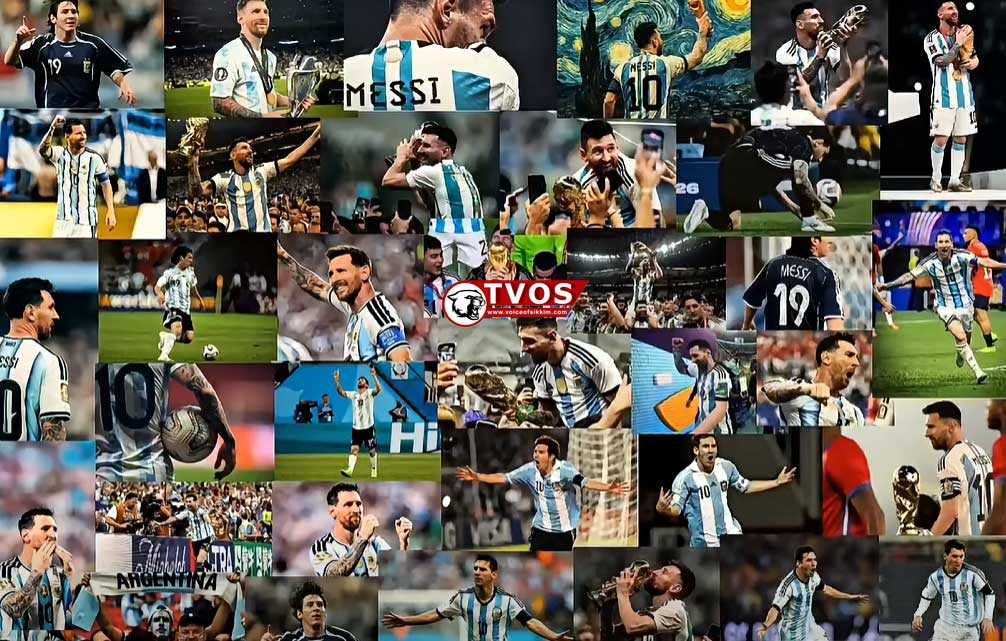
For Argentina and Lionel Messi, appearing in a third consecutive final, the night ended in heartbreak. The Albiceleste fell one step short of becoming the first side to win back-to-back World Cups since Brazil in 1962.
How the Final Unfolded
The first World Cup final played in the New York area was a tense, tactical affair. Spain dominated possession from the outset, with captain Rodri dictating the midfield and starving Messi of service in dangerous areas. Argentina were restricted to just two attempts in 120 minutes, neither of them on target.
The best chance of a goalless regulation period came in the 38th minute, when Mikel Oyarzabal’s low drive forced a sharp save from Argentina goalkeeper Emiliano Martínez. Martínez kept Argentina alive deep into the night, but Spain’s pressure finally told in extra time. In the 106th minute, Ferran Torres met his moment with a thunderous finish that beat Martínez and settled the 23rd edition of the World Cup — the first staged across three host nations (USA, Canada and Mexico) and the first with 48 teams and 104 matches.
Goalkeeper Unai Simón capped a historic campaign at the other end. Spain conceded just one goal in the entire tournament — the fewest ever by a world champion — with Simón keeping seven clean sheets in eight matches.
Award Ceremony: Rodri, Mbappé and Simón Take Individual Honours
Following the trophy presentation, FIFA confirmed the tournament’s individual awards:
- Golden Ball (Best Player): Rodri (Spain) — The Spanish captain and 2024 Ballon d’Or winner was rewarded for his complete control of games throughout the tournament, edging out Messi and Mbappé.
- Golden Boot (Top Scorer): Kylian Mbappé (France) — 10 goals and 4 assists, finishing ahead of Lionel Messi (8 goals), Erling Haaland and Jude Bellingham, despite France exiting in the semi-finals.
- Golden Glove (Best Goalkeeper): Unai Simón (Spain) — Seven clean sheets, a single goal conceded, and a save percentage above 90.
- Young Player of the Tournament: Pau Cubarsí (Spain) — The 19-year-old defender anchored the meanest defence in World Cup history.
- FIFA Fair Play Award: Netherlands.
A Final of Firsts: Halftime Show Makes History
The 2026 final also staged the first-ever live halftime show in World Cup history. The 11-minute performance, curated by Coldplay frontman Chris Martin and produced with the nonprofit Global Citizen, featured Madonna, Shakira, BTS, Justin Bieber and Burna Boy, with appearances by conductor Gustavo Dudamel, New York’s PS22 Chorus, and characters from Sesame Street and The Muppets. The show supported the FIFA Global Citizen Education Fund, an initiative aiming to raise USD 100 million to expand access to education and football for children worldwide.
The Road to Glory
The expanded 48-team tournament, co-hosted by the United States, Canada and Mexico from June 11 to July 19, saw all three host nations eliminated in the Round of 16 — Canada by Morocco, Mexico by England, and the USA by Belgium. From the quarter-finals onward, all matches were played in the United States, culminating in the New Jersey showpiece in front of a capacity crowd of 82,500.
For Spain, the triumph confirms a golden generation built around Rodri, Lamine Yamal, Pedri, Dani Olmo and Cubarsí. For Argentina, it likely marks the end of an era, with Messi’s fourth World Cup final almost certainly his last.