
New Delhi, Aug 4 : Warehouses in Rajasthan have already lost more than five lakh cans and bottles of Red Bull, Sting and Campa Energy to state seizures, months before the industry’s own 90 day deadline to rework packaging even arrives. The raids are the sharpest sign yet that India’s beverage regulator has moved from warning letters to active market policing on what companies can call an energy drink.
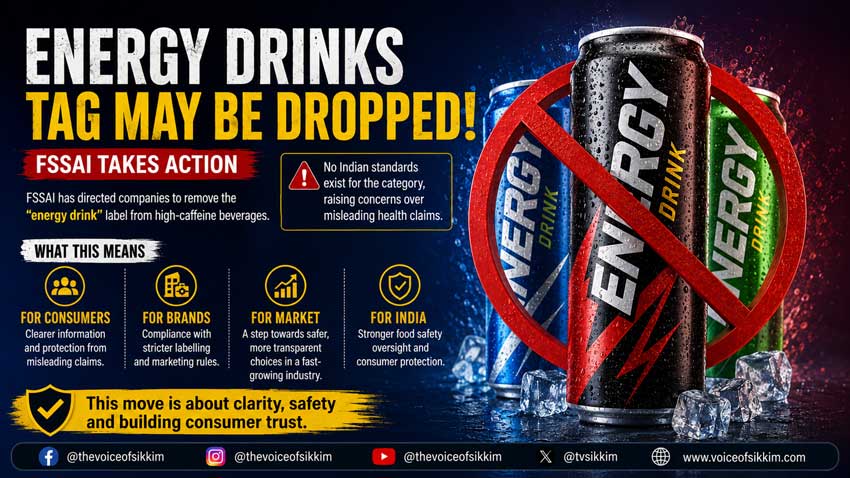
The trigger was a set of show cause notices the Food Safety and Standards Authority of India sent on July 1 to six brands, Red Bull Energy Drink, PepsiCo’s Adrenaline Rush and Sting, Reliance Consumer Products’ Campa Energy Drink Gold Boost, Hell Energy, and Coca-Cola backed Monster Energy. The regulator’s core objection is technical but consequential, India has never notified a separate food standard for products sold as energy drinks, so companies cannot rely on their existing licensing category as cover for the term. Products with this composition, FSSAI says, more properly belong under the standards already prescribed for caffeinated beverages.
Alongside the naming issue, FSSAI took aim at the marketing language wrapped around these products, claims like vitalises body and mind, enhances focus and aids in general weakness, arguing consumers could mistake advertising copy for an established health benefit.
Enforcement Outran the Deadline
While FSSAI’s 90 day compliance window was still being negotiated at the national level, Rajasthan didn’t wait. State food safety officials seized over 53,000 bottles of Red Bull from a single Jaipur warehouse in July, pulled Hell Energy and Sting consignments for lab testing, and by early August had confiscated more than five lakh cans and bottles statewide. On July 8, the state went further, directing e-commerce platforms, Amazon, Flipkart, Blinkit and Swiggy Instamart, to stop listing or promoting any of the named products as energy drinks. None of the platforms responded to queries on the directive.
That state level aggression set the backdrop for a tense closed door meeting between industry executives and FSSAI chief executive Rajit Punhani. Officials from Maharashtra and Gujarat also sat in, suggesting enforcement is likely to spread beyond Rajasthan through state level food safety authorities rather than staying centralised. Punhani reportedly waved off industry’s commercial concerns outright, telling companies they could take the matter to court if they disagreed. There was no move to soften the ruling.
Industry’s Case, and Why It Didn’t Land
The Indian Beverage Association had made its objections in writing on July 6, days before that meeting. Its letter didn’t dispute the underlying standards issue so much as the process, it warned that publicising preliminary notices could damage reputations and disrupt operations, and pushed for a risk based, consultative approach to future regulatory shifts instead of abrupt directives. The association maintained it was still committed to compliance.
None of it moved FSSAI. By the end of the meeting, the companies had agreed to fall in line, and the regulator confirmed the 90 day window to update labels, with no extension on offer. Two operational questions are still unresolved, when exactly the 90 day clock started, and whether companies get to sell down existing packaged stock rather than pull it immediately.
What’s at Stake Commercially
The numbers explain the resistance. India’s energy drink segment is running at roughly 13,000 crore rupees a year and was tracking toward 1.6 billion dollars by 2028. Much of that growth traces back to PepsiCo’s Sting, which broadened the category well beyond premium urban buyers after its 2017 launch by pricing energy as an accessible promise rather than a premium one. Red Bull’s global Gives You Wings positioning and Pepsi’s own electrifying energy ad language for Sting are built on the same premise the regulator is now dismantling.
Losing the label doesn’t necessarily mean losing the shelf space, companies are expected to lean harder into taste, refreshment, gaming culture, nightlife and lifestyle cues instead of direct energy or performance claims. But for brands whose entire go to market rested on the word energy, that is a rebuild, not a tweak.
FSSAI separately confirmed it suspended the manufacturing licence of Westend Agro Products Pvt Ltd after an inspection uncovered altered manufacturing and expiry dates, tampered batch numbers, and misleading declarations, a reminder that the current enforcement push covers more than just the six named energy drink brands.
Not Just an India Problem
The regulatory mood echoes what’s happening elsewhere. England is set to ban high caffeine energy drinks for under sixteens from April 2026, and parts of Pakistan already force these products to carry a stimulant drink label instead. FSSAI and Punhani did not respond to requests for comment on this story, PepsiCo declined to comment, and the other five companies did not respond.