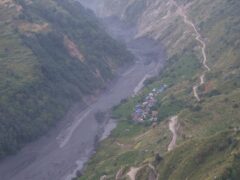
Nepal’s Department of Hydrology and Meteorology said information about the newly formed lake and possible breach was received from the Chinese side through the Ministry of Foreign Affairs.
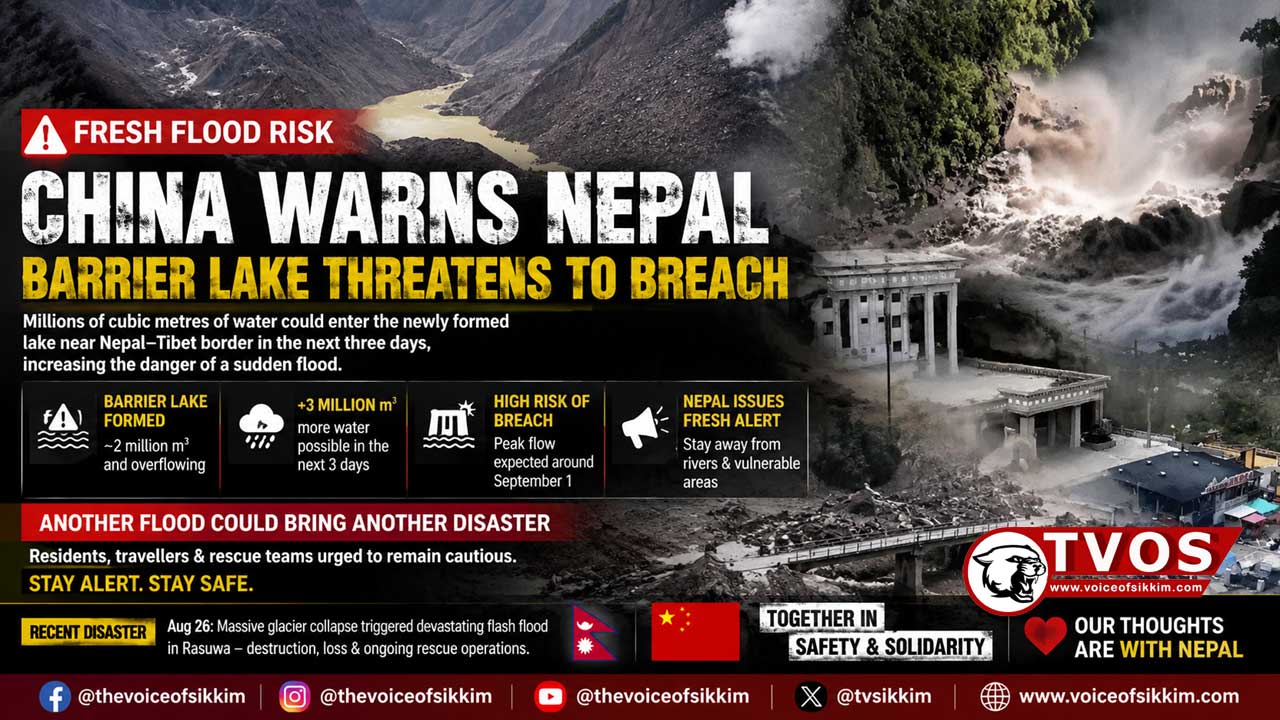
Kathmandu, Aug 28: China has alerted Nepal to a fresh flood risk from a barrier lake near the Nepal-Tibet border, warning that millions of cubic metres of additional water could enter the newly formed lake over the next three days and increase the danger of a sudden breach.
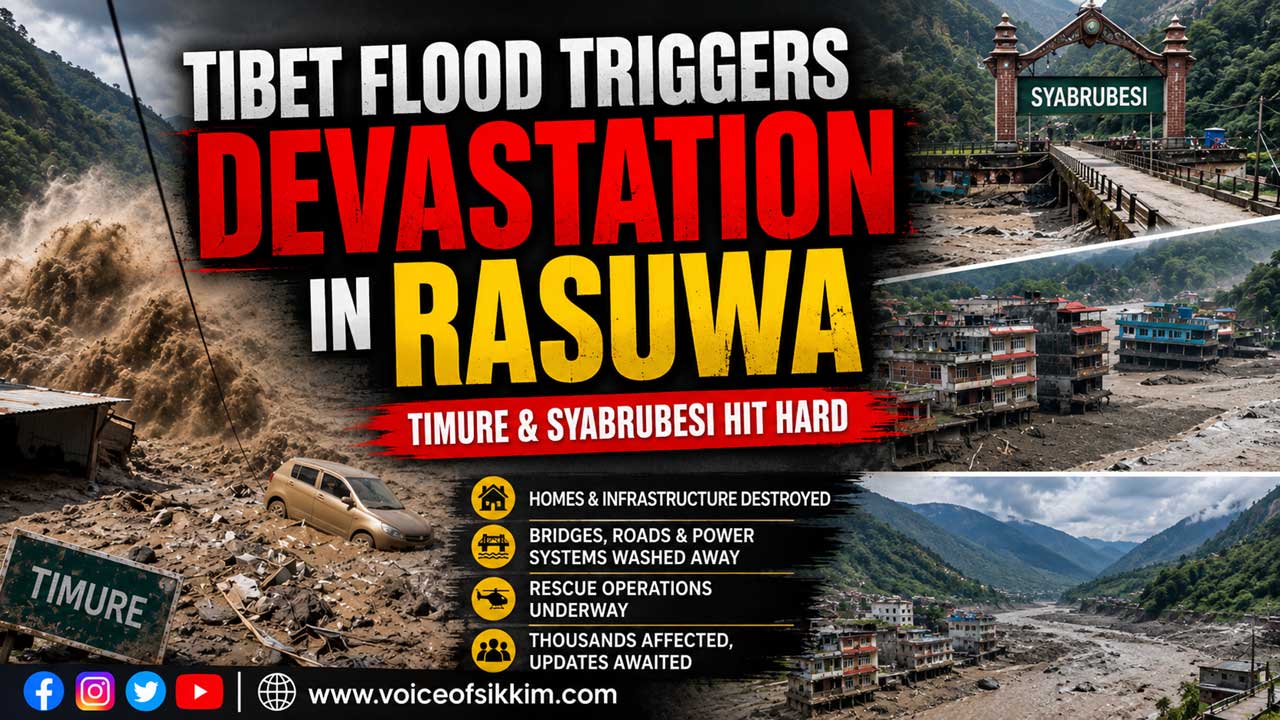
The warning comes as Nepal and Tibet continue to reel from the catastrophic August 26 flash flood that devastated settlements and infrastructure across the Himalayan border region.
According to information conveyed by Chinese authorities to Nepal, a barrier lake has formed near the confluence of the Chhochen Khola and Purepu Tsangpo rivers. The lake was estimated to contain around 2 million cubic metres of water by Thursday morning and was already overflowing.
Chinese authorities estimate that another 3 million cubic metres of water could flow into the lake over the next three days. The continued accumulation has increased concerns that the natural barrier holding back the water could fail, potentially releasing another destructive surge downstream.
Nepal Authorities Issue Fresh Alert
Nepal’s Department of Hydrology and Meteorology said information about the newly formed lake and possible breach was received from the Chinese side through the Ministry of Foreign Affairs.
Nepal’s disaster management authorities have also warned that another lake formed by debris blocking the Bhote Koshi River at the site of Wednesday’s disaster is rising and could burst.
Residents living along downstream river corridors, travellers and personnel involved in rescue operations have been urged to exercise extreme caution and remain away from riverbanks and other vulnerable areas.
The warnings have prompted some rescue teams working close to the riverbed to withdraw towards higher and safer ground as authorities monitor water levels and the stability of the natural dams.
Peak Flow Risk Around September 1
Chinese authorities have warned that the danger could increase further over the coming days.
Chinese state media, citing the country’s Ministry of Water Resources, said the barrier lake faces a high risk of breaching, with peak flow expected around September 1. Rain forecast across the region during the coming week could further aggravate the situation.
Zhu Jinfeng, a researcher with China’s Ministry of Water Resources, said both the volume of water and the associated danger were continuing to increase.
Region Still Recovering From August 26 Disaster
The fresh warning comes only days after a massive glacier collapse on August 26 unleashed rock, ice, mud, debris and water through Himalayan river systems along the Nepal-Tibet border.
The disaster devastated communities and critical infrastructure along the corridor connecting Nepal with Tibet, destroying roads, bridges, settlements and border facilities while leaving rescue teams struggling to reach isolated areas.
Search, rescue and recovery operations remain underway across the affected region. The emergence of new barrier lakes has added another layer of danger for survivors, emergency personnel and downstream communities.
Authorities on both sides of the border are closely monitoring the lakes as the possibility of secondary flooding remains a serious concern.