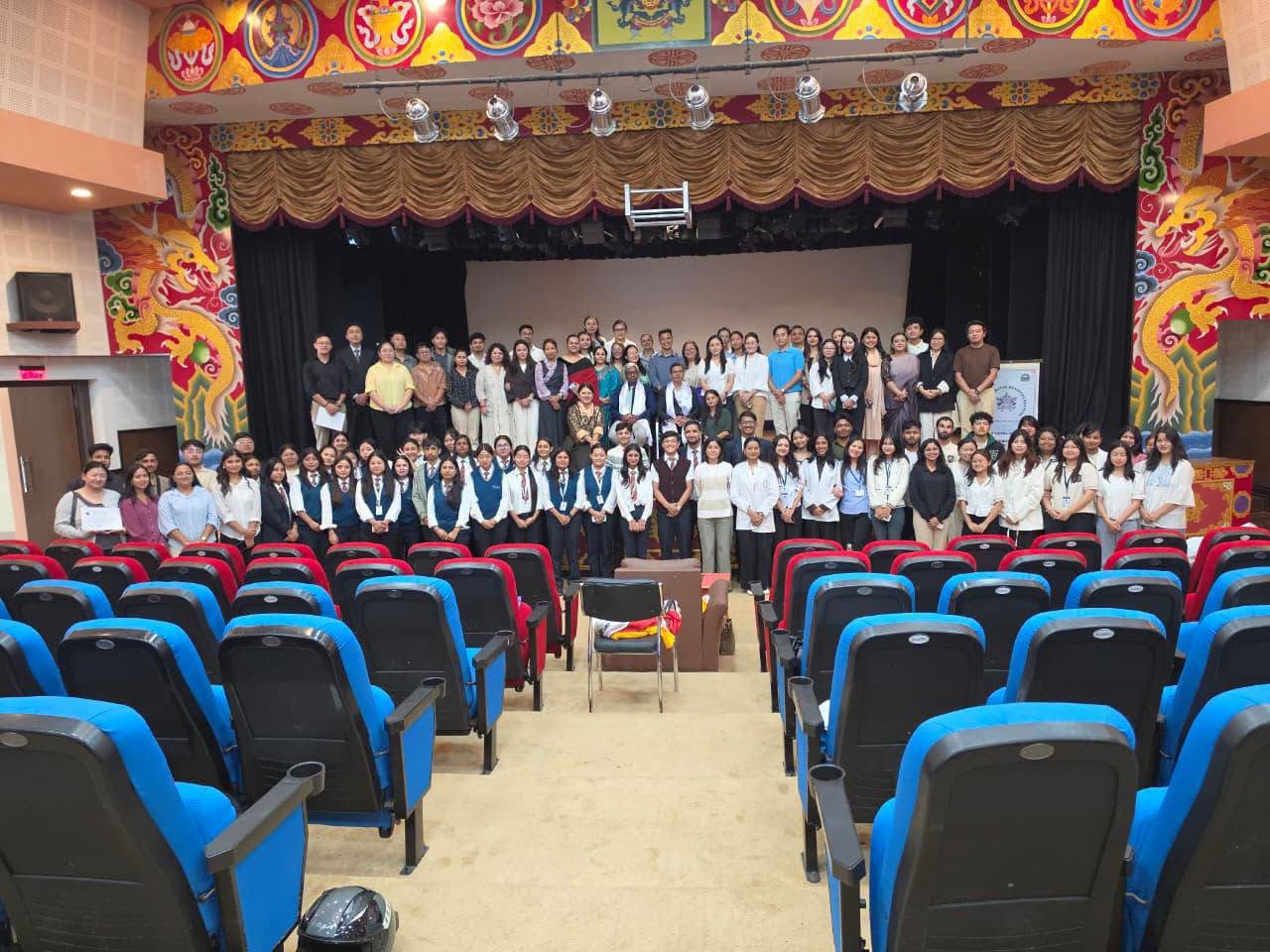
Gangtok, Sep 7: First Sikkim ASPWA State Conference in Gangtok brings experts from STNM Hospital and AIIMS New Delhi together for cardiac and stroke rehabilitation training. The All Sikkim Physiotherapists’ Welfare Association (ASPWA) concluded its first State Conference-cum-Continuing Medical Education (CME) programme in Gangtok, bringing together physiotherapists, medical professionals, clinical experts and students for two days of academic discussions and hands-on training focused on cardiovascular and stroke rehabilitation.
Held at STNM Hospital on September 5 and 6, the conference centred on the theme, “The Role of Physiotherapy and Physical Activity in the Prevention and Management of Cardiovascular Disease and Stroke.”
The programme aimed to promote evidence-based physiotherapy practices in Sikkim while strengthening coordination between physiotherapists, doctors and other healthcare professionals involved in rehabilitation and patient care.
Health Minister G.T. Dhungel attended the inaugural programme as the chief guest, while Labour Department Advisor Phigu Bhutia was present as the guest of honour.
Senior officials and medical professionals from STNM Hospital, including the Medical Superintendent, Additional Medical Superintendents and Nursing Superintendent, also attended the programme along with consultants, clinicians, physiotherapists and students.
The conference paid tribute to late Dr Sanjay Upreti, former Consultant Cardiologist at STNM Hospital, remembering his contribution to healthcare services in Sikkim.
Specialists Discuss Cardiac and Stroke Rehabilitation
The first day featured lectures and clinical discussions covering cardiovascular diseases, stroke management and rehabilitation.
Among the speakers were senior cardiologist Dr D.P. Rai, cardiologist Dr Palden Wangchuk, neurologist Dr Jigdel T. Wangdi, cardiorespiratory physiotherapist Dr Tsultim Sangpo (PT) and neuro physiotherapist Dr Manoj Kharka (PT).
The sessions examined several aspects of rehabilitation, including early intervention, cardiovascular risk management, stroke recovery, cardiopulmonary rehabilitation and multidisciplinary approaches to patient care.
Experts highlighted the role physiotherapy can play at different stages of recovery and the importance of coordinated rehabilitation strategies for patients affected by cardiovascular diseases and stroke.
AIIMS Experts Lead Hands-On Masterclasses
The second day focused on practical clinical training, with physiotherapy experts associated with AIIMS New Delhi conducting evidence-based masterclasses for participants.
Dr Prabhat Ranjan (PT), Senior Physiotherapist in Neurology at AIIMS New Delhi, conducted a masterclass on “Bobath Technique for Stroke – Evidence-Based Practice.”
The session covered Neuro-Developmental Treatment (NDT) and Bobath concepts used in adult stroke rehabilitation, with emphasis on posture, motor control, patient handling and functional recovery.
Participants were also given an opportunity to take part in guided practical exercises designed to demonstrate the clinical application of the rehabilitation techniques.
Dr Banty Sheware (PT), a senior physiotherapist associated with the Department of Cardiothoracic and Vascular Surgery (CTVS) at AIIMS New Delhi, conducted a masterclass on “Manual Hyperinflation Technique – Evidence-Based Practice.”
Using artificial lung simulators, the session demonstrated the application of manual hyperinflation techniques in critical-care settings.
Participants were introduced to clinical considerations involving secretion clearance, optimisation of lung volume, patient safety and the indications and contraindications associated with the procedure.
Conference Emphasises Evidence-Based Physiotherapy
The two-day conference concluded with an interactive clinical question-and-answer session, allowing students and practising physiotherapists to discuss challenges encountered in clinical settings and the application of advanced rehabilitation protocols.
ASPWA said its inaugural State Conference provided a platform for physiotherapy professionals and students in Sikkim to interact with specialists and gain greater exposure to evidence-based rehabilitation practices.
The association reiterated its commitment to continuing professional development, interdisciplinary healthcare and strengthening physiotherapy and rehabilitation services across Sikkim.