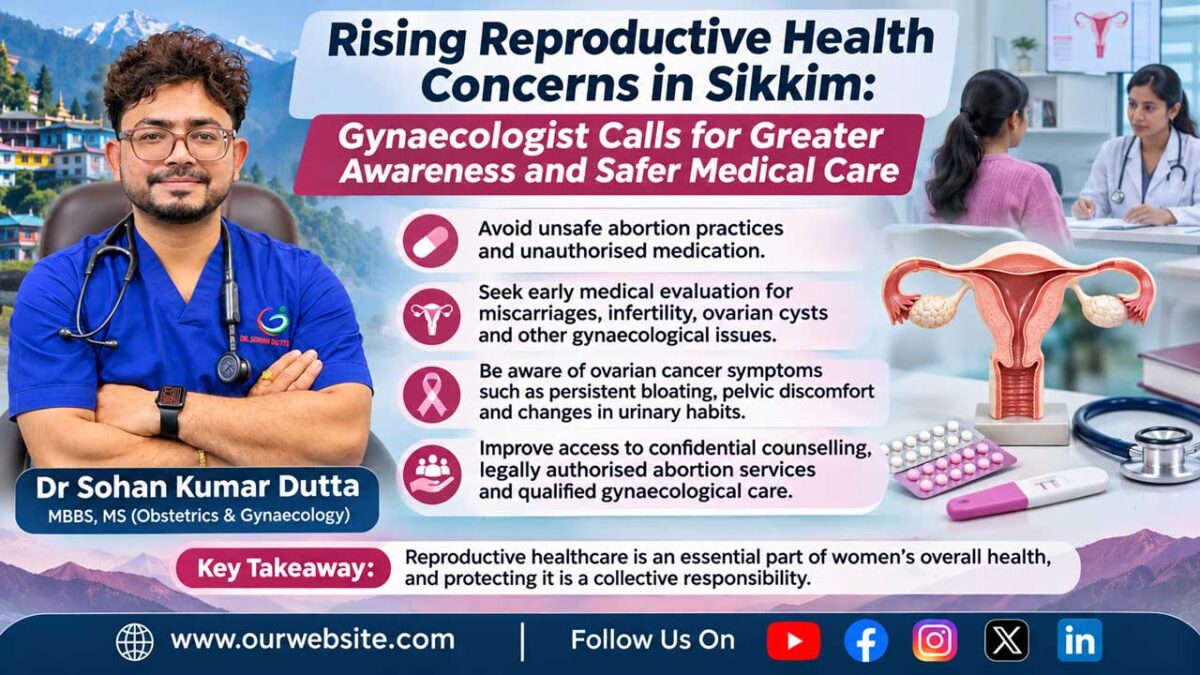
Gangtok, November 13: Rising reproductive health concerns in Sikkim have highlighted the need for greater awareness, timely medical intervention and improved access to specialised gynaecological services, particularly for young women facing complications associated with unsafe abortion practices, unsupervised medication and inadequate reproductive healthcare.
Dr Sohan Kumar Dutta, an MBBS-qualified medical professional with postgraduate specialisation in Obstetrics and Gynaecology, has emphasised the importance of strengthening reproductive healthcare services in Sikkim. Drawing on his experience working in government hospitals across North Bengal and treating patients travelling from Sikkim to Siliguri, he has called for greater public awareness, confidential medical counselling and accessible treatment facilities.
According to Dr Dutta, the inappropriate use of contraceptive pills, unauthorised abortion kits and inadequate post-abortion medical care are among the issues requiring serious attention. He cautioned that unsafe abortion practices, particularly those undertaken without appropriate medical guidance, can expose women to potentially serious complications.
Such complications may include infections, excessive bleeding and damage to reproductive organs. In severe cases, untreated complications can affect future fertility and overall reproductive health. However, medically supervised abortion using recommended methods is generally safe and does not ordinarily compromise future fertility.
Early Diagnosis and Medical Supervision Are Essential
The concerns extend beyond abortion-related complications to several other reproductive health conditions, including recurrent miscarriages, difficulty conceiving, ovarian cysts and other gynaecological disorders.
Dr Dutta has stressed that women experiencing such difficulties should seek professional medical evaluation rather than delay treatment or rely on unverified medication. Early diagnosis can help identify underlying conditions and enable appropriate medical intervention.
Ovarian cancer is another important area requiring public awareness. Although many ovarian cysts are benign and do not indicate cancer, persistent or unusual symptoms should be medically assessed. Symptoms such as persistent abdominal bloating, pelvic discomfort, feeling full quickly and changes in urinary habits may warrant further examination.
Medical professionals also emphasise that contraceptive pills and medication used for abortion serve different purposes. Contraceptive pills are generally safe when used appropriately, while medication abortion should follow evidence-based medical guidance, with access to qualified healthcare support and emergency care when necessary.
The availability of accurate reproductive health information is particularly important for young women who may hesitate to seek medical assistance because of social stigma, fear of judgement or concerns about confidentiality.
Strengthening Women’s Healthcare in Sikkim
Dr Dutta believes that improving reproductive healthcare requires more than expanding treatment facilities. Public education, confidential counselling, regular gynaecological examinations and timely referrals to specialists are equally important.
His professional experience includes high-risk pregnancy management, gynaecological surgery, laparoscopic procedures, gynaecological endoscopy, colposcopy, urogynaecology, infertility management and minimally invasive procedures.
Having interacted with patients from Sikkim seeking medical treatment in Siliguri, he has observed the importance of ensuring that women receive appropriate medical attention without unnecessary delays.
He believes healthcare must focus not only on treating existing medical conditions but also on understanding patients’ circumstances and ensuring that vulnerable individuals can access professional support.
Improving awareness of legally authorised abortion services, strengthening post-abortion care and expanding access to qualified obstetricians and gynaecologists could help address important gaps in reproductive healthcare.
The need for confidentiality is equally significant. Women seeking reproductive health services must be able to discuss their concerns openly and make informed decisions without discrimination or unnecessary social pressure.
Protecting Women’s Health Is a Collective Responsibility
The broader message is that reproductive healthcare should be recognised as an essential component of women’s overall health and well-being.
Educational institutions, healthcare professionals, community organisations and public health authorities all have important roles in improving awareness of reproductive health, contraception, pregnancy-related complications and available medical services.
Dr Dutta has called for a collective commitment to strengthening reproductive healthcare services in Sikkim through awareness programmes, regular medical examinations, professional counselling and improved access to specialised treatment.
Protecting women’s reproductive health is not merely an individual medical concern but a wider public health responsibility that affects families, communities and future generations.
Every woman deserves access to safe healthcare, reliable medical information, dignity, confidentiality and the freedom to make informed decisions about her reproductive future.
The concerns outlined by Dr Dutta underline the importance of building a healthcare environment in which women across Sikkim can seek timely medical assistance with confidence and without fear of judgement.