The recent initiatives by the government are integral to the vision of the ₹360-Crore Organic Economy Mission, highlighting the importance of sustainable development.
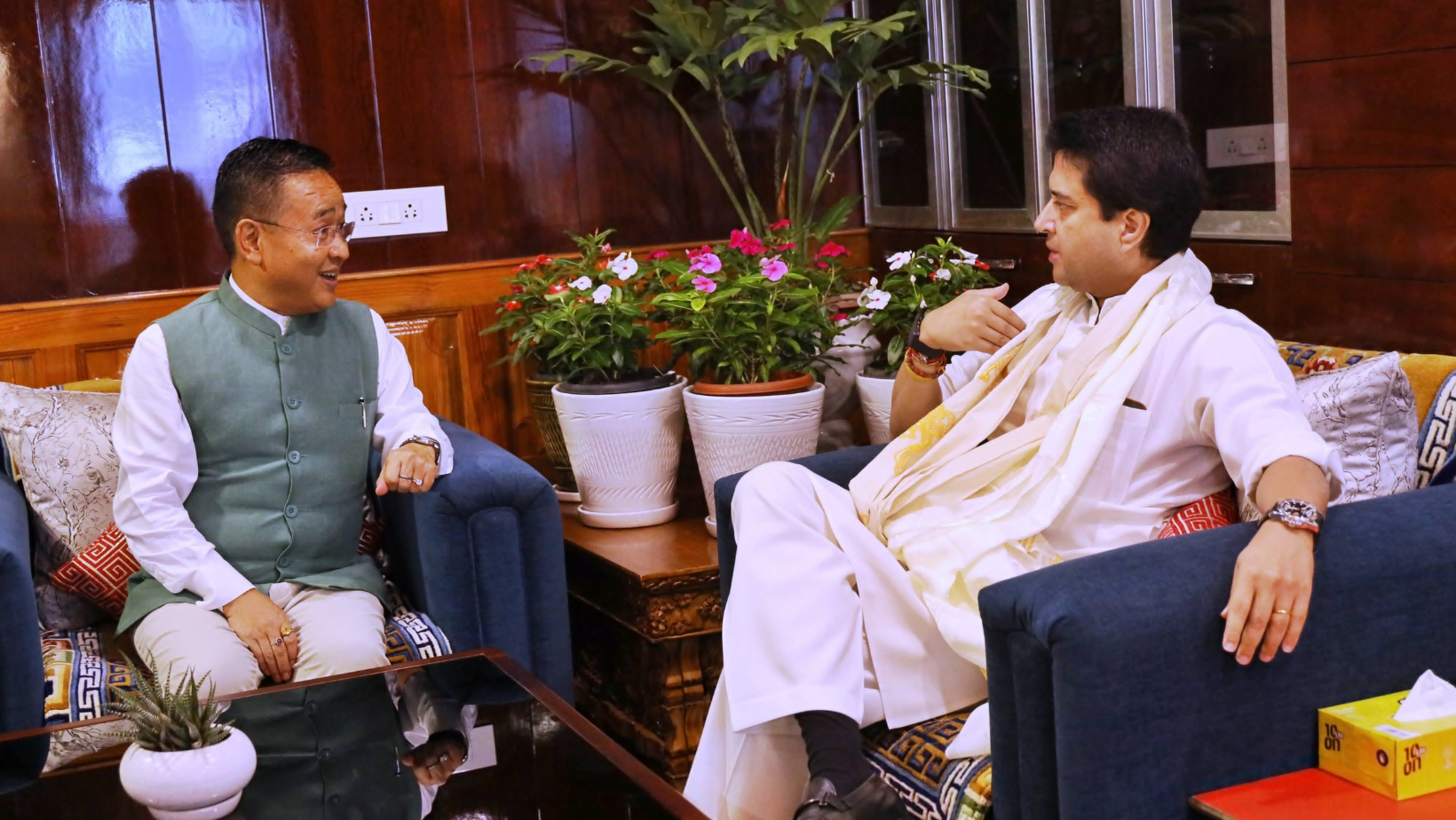
Gangtok, June 01 : Union Minister for Development of North Eastern Region (DoNER) Jyotiraditya M. Scindia has praised Sikkim as a leading example of sustainable development, citing the state’s achievements in organic farming, environmental conservation, tourism, and inclusive growth.
Reflecting on his recent visit during Sikkim’s 51st Statehood Day celebrations, Scindia said the Himalayan state has successfully balanced economic progress with ecological responsibility while preserving its cultural heritage.
The efforts in these areas align with the broader goals of the ₹360-Crore Organic Economy Mission, which seeks to uplift local livelihoods through sustainable practices.
During the visit, the Minister launched Mission Sikkim Organics under the Ministry’s Unique Selling Proposition (USP) programme. The initiative, backed by an investment of nearly ₹360 crore, aims to position Sikkim as a globally recognized premium organic economy through enhanced production, value addition, branding, and market access, contributing to the overall ₹360-Crore Organic Economy Mission.
Scindia also reviewed several major development projects across the state, including the under-construction Khangchendzonga State University campus at Tarku, the Bhaleydunga Skywalk project, and various schemes being implemented under the Prime Minister’s Development Initiative for North East Region (PM-DevINE).
These developments are essential for realizing the potential of the ₹360-Crore Organic Economy Mission.
He inspected infrastructure projects supported by the Ministry in sectors such as roads, bridges, tourism facilities, and public amenities, reiterating the Centre’s commitment to improving connectivity and creating economic opportunities in the region.
Highlighting Sikkim’s ecological richness, the Minister visited the Orchidarium at the Swarna Jayanti Maitreya Manjari Complex, which houses more than 120 rare orchid species. He described the facility as an outstanding example of biodiversity conservation and eco-tourism promotion.
Scindia also commended the state’s vibrant cultural heritage, noting that destinations such as MG Marg reflect the traditions, hospitality, and unique identity of the people of Sikkim.
Placing Sikkim’s progress within the broader transformation of Northeast India, the Minister said the region is emerging as a key gateway for connectivity, commerce, culture, and investment under the Centre’s Act East policy.
The integration of local resources into the framework of the ₹360-Crore Organic Economy Mission will enhance the region’s economic resilience.
He further highlighted the Ministry’s efforts to develop state-specific economic value chains through the USP programme. Along with Mission Sikkim Organics, initiatives such as the Tripura Queen Pineapple Mission, Mizoram Ginger Mission, Arunachal Kiwi Mission, and Coffees of Nagaland have been launched to strengthen agricultural processing, exports, branding, and rural livelihoods.
This approach is crucial in achieving the objectives of the ₹360-Crore Organic Economy Mission, emphasizing collaboration across states.
The Minister said the growing confidence among youth, farmers, entrepreneurs, and local communities reflects the rapid transformation taking place across the Northeast. Reaffirming the vision of Viksit Bharat 2047, he emphasized that the region will play a vital role in India’s future growth story.
The commitment to the ₹360-Crore Organic Economy Mission is evident in the enthusiasm surrounding these initiatives.
Scindia concluded by appreciating the contributions of state governments, stakeholders, and local communities in driving sustainable and inclusive development across Northeast India.
By embracing the principles of the ₹360-Crore Organic Economy Mission, stakeholders can ensure a sustainable future for the region.