Texas/US, October 17 : Tesla has unveiled its long-awaited second-generation Roadster, demonstrating an electric sports car capable of briefly taking flight, performing aerial manoeuvres and accelerating from 0 to 60 miles per hour (approximately 97 km/h) in less than one second.
The spectacular demonstration, held on October 15 at SpaceX’s testing facility in McGregor, Texas, marked a major milestone for the vehicle first announced in 2017. However, Tesla CEO Elon Musk confirmed that production is now scheduled to begin in 2028, nearly eight years later than the company’s original target.
During the unveiling, the redesigned Roadster climbed an inverted track, travelled upside down and launched into the air before rotating and landing on its wheels. The demonstration also featured the vehicle moving above other Tesla models using a propulsion system developed with technology from Musk’s aerospace company, SpaceX.
SpaceX Thrusters Give Roadster Flying Capabilities
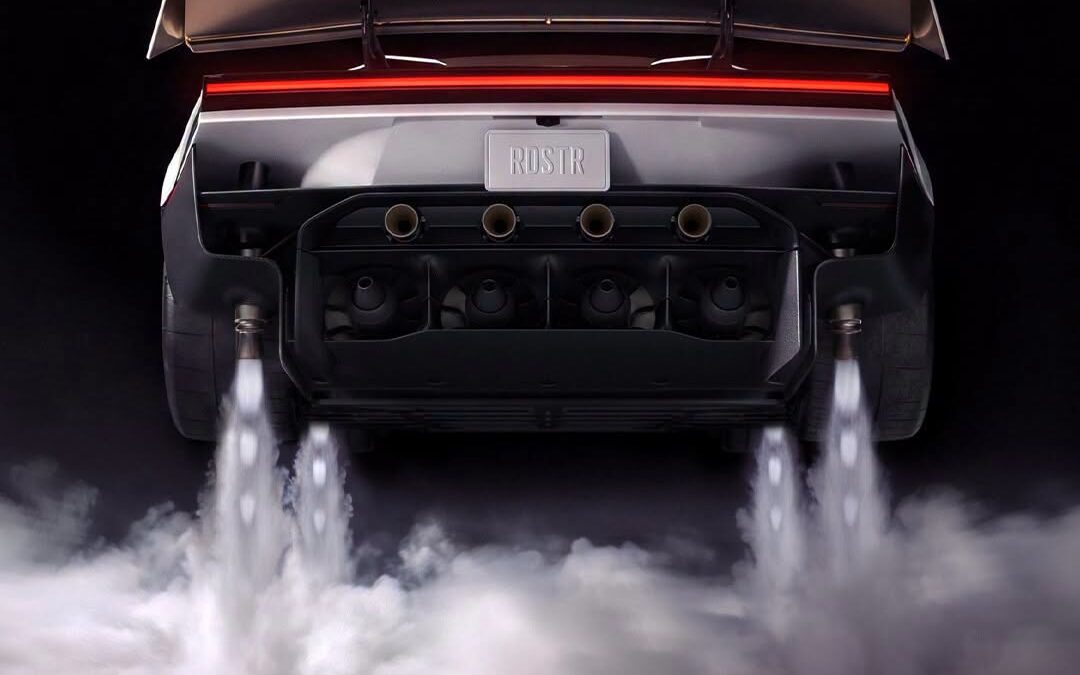
Unlike conventional electric sports cars, the new Roadster incorporates high-pressure compressed-air thrusters designed to generate additional propulsion beyond what its tyres can deliver.
Tesla demonstrated how the system could assist rapid acceleration, lift the vehicle off the ground and control its movement in the air.
An advanced suction system also allows the car to maintain traction on challenging surfaces, including inverted tracks. Active aerodynamic components are intended to improve stability and performance at high speeds.
Tesla claims the Roadster can exceed 230 mph (approximately 370 km/h), while its most powerful configurations are designed to accelerate from 0 to 60 mph in under one second.
These performance figures remain manufacturer claims rather than independently verified production-car results.
Three Roadster Variants Announced
Tesla has outlined three configurations for the next-generation electric sports car.
The Performance version is intended for conventional road use, offering two seats, active aerodynamics and a specialised suction system.
The Thrust variant adds rear-mounted compressed-air thrusters, primarily targeting extreme acceleration and racetrack performance.
The flagship Rocket configuration incorporates multiple thrusters positioned around the vehicle, enabling controlled airborne movements. This single-seat version is expected to have significant restrictions on where it can legally operate.
Tesla has indicated a driving range of approximately 300 miles (483 kilometres), although final production specifications and independently verified performance figures remain unavailable.
Production Delayed Until 2028
Despite the technological demonstration, the Roadster’s commercial future remains uncertain.
Originally presented in November 2017 with production expected in 2020, the vehicle has experienced repeated postponements as Tesla prioritised other electric vehicles and autonomous-driving projects.
Musk now expects manufacturing to begin in 2028. Tesla has reopened reservations for selected versions, but final selling prices and guaranteed delivery schedules have not been announced.
The company has also not confirmed plans to introduce the new Roadster in India.
Can Tesla’s Roadster Really Fly?
Although the prototype demonstrated airborne movement, its capabilities should not be confused with those of a conventional aircraft.
The system relies on compressed-air propulsion for short, controlled movements rather than sustained aviation. Questions remain about passenger safety, operating restrictions, certification and whether such technology can be approved for public roads.
The demonstration nevertheless represents an unusual attempt to combine automotive engineering with aerospace propulsion.
For Tesla, the Roadster is more than another electric sports car. It is a high-profile engineering project intended to showcase the company’s technological ambitions at a time when its wider business is increasingly focused on autonomous transportation.
Whether those ambitions translate into a commercially available vehicle will depend on Tesla’s ability to deliver a production-ready Roadster in 2028.