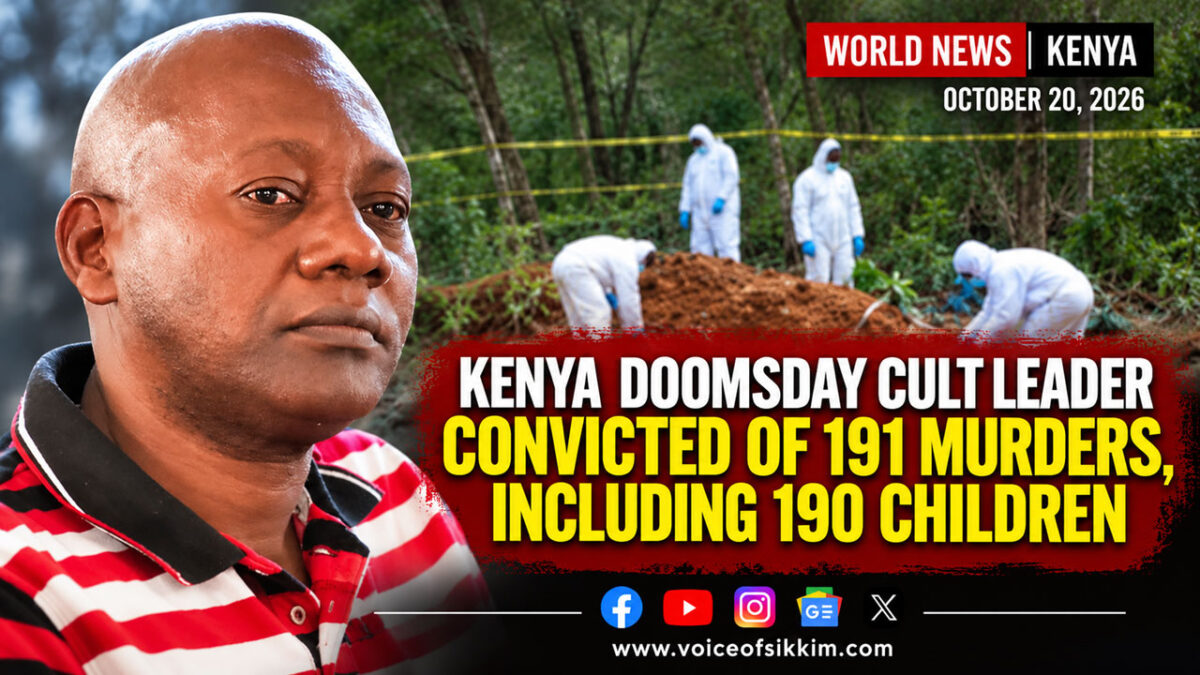
Nairobi, October 20: Kenya doomsday cult leader Paul Mackenzie and 28 of his associates have been convicted of murdering 191 people, including 190 children, in a mass starvation tragedy that claimed more than 400 lives and exposed serious failures in the country’s oversight of religious groups.
The verdict was delivered on Monday, October 19, by Justice Diana Kavedza at the High Court in Mombasa. The court found that Mackenzie, founder of the Good News International Church, had established a system of religious control that compelled followers to starve themselves and their children in the belief that death would bring them closer to Jesus Christ.
Investigators established that Mackenzie had moved hundreds of followers to an isolated settlement covering approximately 800 acres in Kilifi County. Families lived in makeshift shelters, separated from surrounding communities, while church leaders enforced strict fasting directives.
Evidence presented during the trial showed that children were deliberately targeted first. Parents were prevented from feeding them, while guards monitored the settlement to stop followers from escaping or obtaining food.
Survivors described beatings and intimidation against those who resisted the fasting instructions. Postmortem examinations revealed that although starvation caused many deaths, some victims had suffered strangulation, suffocation or head injuries.
Mackenzie, a former taxi driver who established his church in 2003, had also discouraged followers from sending their children to school or seeking medical treatment. His preaching portrayed education, hospitals and certain government institutions as contrary to his religious beliefs.
The mass graves sparked widespread anger across Kenya, particularly after it emerged that authorities had investigated Mackenzie’s activities years before the tragedy came to light.
President William Ruto previously acknowledged that government agencies should have intervened to prevent the deaths. The case subsequently prompted calls for stronger oversight of religious organisations and better protection for vulnerable followers.
For relatives of the victims, the verdict represents a significant development after years of waiting for justice. Francis Wanje, who lost eight family members, including his daughter and two grandchildren, was among those who attended the proceedings.
Although more than 400 bodies have been recovered from Shakahola Forest, Monday’s convictions relate specifically to the deaths of 190 children and one adult. Investigations and separate criminal proceedings involving additional victims remain ongoing.
Mackenzie and his co-defendants have denied wrongdoing. His lawyer has indicated plans to appeal the conviction.
The court has scheduled a mitigation hearing for October 30, while sentencing is set for November 6, 2026. Mackenzie and the other convicted defendants could face life imprisonment.
The ruling marks a major milestone in one of the deadliest cult-related tragedies in recent history, more than three years after the discovery of the Shakahola mass graves.