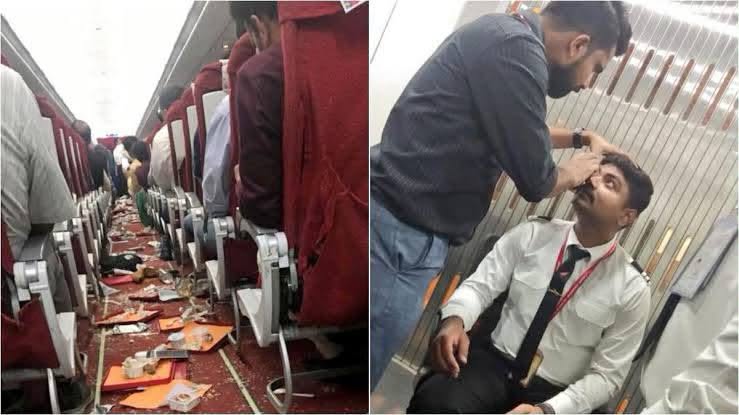

New Delhi, August 5: An Air India flight from Phuket to Delhi ran into severe air turbulence on Tuesday , August 4, leaving 15 passengers and crew members injured, seven of whom were hospitalised. The aircraft landed safely at Indira Gandhi International Airport, and the aviation regulator has opened an investigation into the incident.
What Happened
Flight AI2379, an Airbus A320 (registration VT-EXO), was carrying 137 passengers, including three infants, along with eight crew members comprising two pilots and six cabin crew. According to accounts from passengers on board, the aircraft hit turbulence without warning and dropped nearly 300 feet within seconds during the flight, throwing passengers and loose items around the cabin.
One passenger described a one-and-a-half-year-old infant being thrown several seats away, while others reportedly struck the ceiling and floor of the cabin as the aircraft shook violently. An Italian passenger, Viviana, told reporters that people around her were bleeding and that the ordeal left her shaken and in tears.
Air India’s Statement
In an official statement, Air India said Flight AI2379 experienced a brief in-flight turbulence-related event during cruise, which caused a momentary change in altitude. The airline confirmed the aircraft landed safely in Delhi and that all passengers and crew disembarked without incident, adding that a small number of passengers and crew with minor injuries were taken for precautionary medical evaluation by the airport medical team.
An Air India spokesperson said the airline is cooperating fully with authorities investigating the matter and remains focused on the welfare of those affected.
Casualties and Medical Response
Initial reports from sources put the injury count at 10 passengers and two crew members. This was later revised, with the Press Information Bureau confirming that a total of 15 passengers and crew were injured, including seven passengers who required hospitalisation. According to DGCA officials, one cabin crew member sustained a severe injury, another suffered an injury, and several passengers were left with minor injuries.
Injured passengers were admitted to Fortis Hospital in Vasant Kunj and Medanta Hospital for treatment.
Government Response
Union Civil Aviation Minister Ram Mohan Naidu Kinjarapu visited the injured passengers at Fortis Hospital, accompanied by the Secretary of the Ministry of Civil Aviation and the Director General of Civil Aviation. Senior ministry officials also visited Medanta Hospital to coordinate with medical staff and ensure the injured received adequate care.
DGCA Investigation
The Directorate General of Civil Aviation has launched a detailed investigation into the incident. The probe will examine the prevailing weather conditions at the time, the crew’s handling of the situation, and the airline’s operational procedures. Air India has been directed to preserve all relevant flight records and submit the required reports as part of the inquiry.
The incident has renewed concerns over the frequency of turbulence-related events on Indian carriers and the growing impact of extreme and unpredictable weather patterns on aviation safety.
Background
This is not the first turbulence-related incident involving Air India in recent years, with previous cases reported on routes including Delhi-Sydney and Amritsar-Delhi. Aviation authorities have periodically flagged the need for updated protocols for pilots operating in turbulent weather conditions.
What Is Turbulence
Turbulence is sudden, irregular movement of air that causes an aircraft to shake, dip, or shift altitude unexpectedly. It can be caused by storms, jet streams, mountains, or temperature differences in the atmosphere.
Clear air turbulence, believed to be involved in the AI2379 incident, is especially dangerous because it occurs in cloudless skies and cannot be detected by aircraft radar or seen visually, giving pilots little to no warning before it strikes.
While turbulence rarely causes structural damage to modern aircraft, which are built to withstand far greater stress, it is the leading cause of in-flight injuries, largely affecting passengers and crew who are not wearing seatbelts at the time. This is why airlines and pilots consistently advise keeping seatbelts fastened throughout the flight, even when the sign is switched off.
Explainer Video In English
Explainer Video In Hindi
(This report will be updated as more details emerge from the DGCA investigation.)